How to start forex trading as a beginner with a clear plan and controlled risk
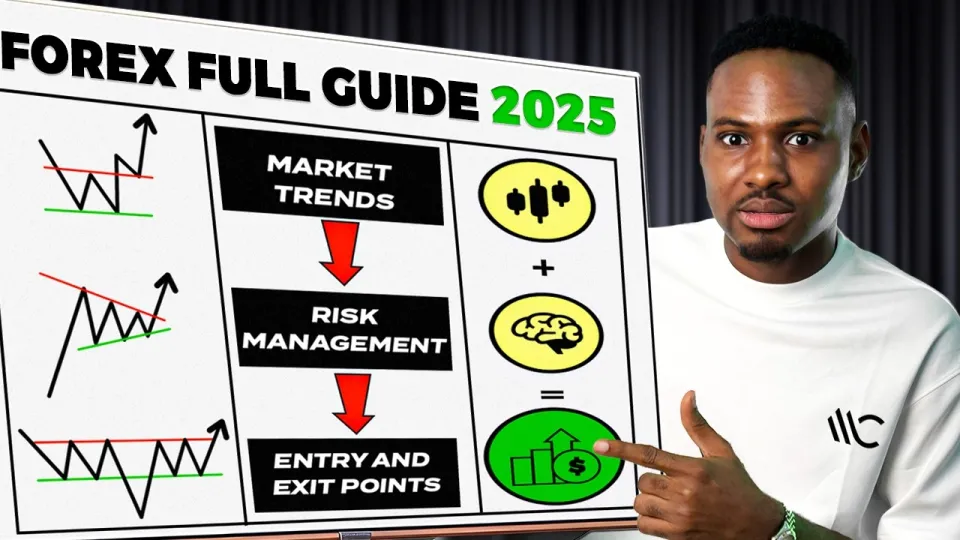
Video: How To Start Forex Trading For Beginners’ 2025 (Full Course)
Want articles like this for your own video to promote it on YouTube and Google? Order them through the Telegram bot @sat_sit_bot. Articles with your video embedded are written and posted by the bot itself — on popular topical sites (no ads). Free trial — 50 articles.
· based on the channel Jeffrey Benson Forex
Forex trading for beginners starts with three things: understanding that you are trading currency pairs on an over-the-counter market, opening a demo account on a platform such as MetaTrader 5, and writing a rule-based plan that caps risk per trade at around 1% of the account. Only after those steps are in place does it make sense to fund a live account and place a first position. A structured starting point is the student program at Fire Pips FX, which the author of the course uses to walk new traders through the same sequence.
What forex trading actually is and how currency pairs are quoted
Forex is the global market where one currency is exchanged for another, and every price you see is a ratio between two currencies. A quote like EUR/USD = 1.0850 means one euro buys 1.0850 US dollars; the first currency is the base, the second is the quote currency. When you buy the pair you are long the euro and short the dollar, and when you sell it you do the reverse.
The market is decentralized: banks, brokers, funds and retail traders deal through electronic networks rather than a single exchange, which is why spreads and execution can differ between brokers. Daily turnover runs in the trillions of dollars, making forex the most liquid market in the world, but liquidity is not the same as safety — it only means orders usually fill quickly at a visible price.
Beginners usually meet three instrument groups first: major pairs (EUR/USD, GBP/USD, USD/JPY), minors or crosses without the dollar (EUR/GBP, AUD/NZD) and metals such as gold, which many brokers quote alongside currencies. Majors tend to have the tightest spreads, which matters when a strategy targets small moves.
How the forex market works across sessions and timeframes
The forex market runs 24 hours a day from Sunday evening to Friday evening, split into four sessions: Sydney, Tokyo, London and New York. The London session is the deepest, and the London–New York overlap is typically the most volatile window of the day, which is why many intraday strategies are built around it.
Price moves because of interest-rate decisions, inflation data, employment reports and risk sentiment. A central bank hinting at higher rates tends to strengthen its currency, while weak data does the opposite. Economic calendars publish these releases in advance, so a beginner can avoid opening a trade minutes before a major print.
Timeframes matter as much as sessions. A daily chart shows the trend, a four-hour chart shows the structure, and a fifteen-minute chart shows entries. Mixing timeframes without a rule is one of the fastest ways to take contradictory trades on the same pair.
The tools and setup a beginner needs before the first trade
A working setup is small: a regulated broker, a trading platform, a chart with a few indicators and a journal. MetaTrader 5 is the platform referenced in the course, and the workflow is to register with a broker, download MT5, connect the trading account and confirm that prices and spreads update correctly on a demo login.
- Choose a broker regulated in a recognized jurisdiction and check spreads, commissions, minimum deposit and withdrawal terms.
- Open a demo account first and trade it for at least a few weeks to learn order types and platform mechanics.
- Set up charts with a clean template — a moving average, support and resistance levels, and a session indicator are enough.
- Build a trading journal that records pair, direction, entry, stop, target, session and the reason for the trade.
- Only after consistent demo results, fund a live account with money you can afford to lose.
Order types deserve a separate mention. A market order fills at the current price, a limit order waits for a better price, and a stop order triggers on a breakout. Every position should carry a stop-loss from the moment it is opened, because the platform will not protect the account on its own.
A basic strategy foundation built on structure, levels and confirmation
A beginner strategy works best when it answers three questions in advance: where is the trend, where is the level, and what confirms the entry. Trend direction comes from higher timeframes, levels come from previous highs, lows and round numbers, and confirmation comes from a candle pattern or a momentum shift at that level.
A simple version looks like this. Mark the previous day's high and low plus the nearest swing levels on the four-hour chart. Wait for price to reach one of those levels during the London or New York session. Enter only if a rejection candle or a break-and-retest appears, place the stop beyond the level, and target the next level in the direction of the higher-timeframe trend.
Risk is defined before the entry, not after it. If the stop is 30 pips away and the account is $1,000 with a 1% risk limit, the position size is the one where 30 pips equals $10 — roughly 0.03 lots on a standard pair. That calculation, repeated every time, is what keeps a losing streak from turning into an account-ending event.
Placing a first trade and reading the result correctly
Placing a first trade is a mechanical sequence: pick the pair, check the session and the calendar, define entry, stop and target, size the position, then send the order with the stop attached. After that, the trade is managed by the plan — not by how the screen feels in the moment.
A practical checklist before clicking buy or sell:
- Is the setup one that is written in the plan, or is it improvised?
- Is the stop placed at a level where the idea is proven wrong, not at a random distance?
- Does the position size match the 1% risk limit?
- Is there a major news release within the next hour?
- Is the reward at least twice the risk?
After the trade closes, the journal entry matters more than the result. A winning trade taken outside the plan is a warning sign, and a losing trade that followed every rule is a data point. Reviewing twenty or thirty entries usually reveals which session and setup produce the best results for a particular trader.
Common beginner mistakes and the questions traders ask most
The most expensive beginner mistakes are structural rather than analytical: too much leverage, no stop-loss, revenge trading after a loss and switching strategies before any of them has a sample size. Leverage of 1:500 turns a small account into a large position, so a 20-pip move against the trade can wipe out a deposit that would have survived with sane sizing.
Another common trap is learning in the wrong order. New traders often hunt for signals before they can read a chart, which is why so many ask whether copying trades is a shortcut. Copying can show what a professional entry looks like, but it does not build the skill of managing an open position or accepting a loss. A free daily signal channel such as https://t.me/firepipsignals is useful as a study aid, not as a replacement for a plan.
Overtrading is the quiet version of the same problem. Sitting in front of a chart for hours produces trades that the plan never asked for, and the commissions and spreads add up. Limiting activity to one or two sessions and a fixed number of setups per day solves most of it.
Finally, expectations. Forex is not a fast route to a fixed income; it is a skill with a long learning curve, and the first months are about protecting capital while the process is built. Traders who treat the demo phase as practice rather than a formality tend to survive the transition to live money.
Useful links and final thoughts
The course materials and the author's student program are collected here:
- Student plans and course access: https://firepipsfx.com/plans
- Free daily signal channel: https://t.me/firepipsignals
- Broker registration used in the walkthrough: https://my.assexmarkets.com/auth/register?partner_code=1699134
- Premium signal group access: https://t.me/jeffreybenzhelpbot
Starting forex trading as a beginner comes down to sequence: learn how currency pairs and sessions work, set up a demo account on a platform such as MT5, write a plan with a hard risk limit, and only then risk real money. The full course from Jeffrey Benson Forex follows exactly that order — market basics, tools, strategy foundation, a first trade and the mistakes to avoid — which makes it a usable curriculum rather than a collection of tips. Anyone serious about the skill should treat the student program as the structured next step after the free material, and judge progress by rule-following rather than by a single week's profit.
Key takeaways
- Forex is an over-the-counter market where currencies are quoted in pairs such as EUR/USD; there is no central exchange.
- Four trading sessions — Sydney, Tokyo, London and New York — overlap and set liquidity and volatility during the day.
- A beginner needs a demo account, a charting platform such as MT5, a trading plan and a risk limit of roughly 1% per trade.
- Leverage magnifies both profit and loss; position size, not the stop distance alone, defines real risk.
- Jeffrey Benson Forex structures its beginner course around market basics, tools, strategy, a first trade and common mistakes.
Source: How To Start Forex Trading For Beginners’ 2025 (Full Course) · Markdown version
Questions & answers
How much money do I need to start forex trading?
There is no universal minimum, but a practical starting point is an amount you can lose without affecting your finances, often a few hundred dollars. With a 1% risk limit, a $500 account risks $5 per trade, which keeps position sizes small and the learning process intact. Many brokers accept smaller deposits, but tiny accounts combined with high leverage are the fastest way to lose a deposit.
Can I learn forex by copying someone else's trades?
Copying trades can show you how a professional reads an entry, but it does not teach position management or the discipline of taking a loss. Use copied or signal trades as study material alongside your own demo journal, and only rely on them after you understand why each trade was taken.
How long does it take before a beginner becomes profitable?
Most beginners need months of demo and small live trading before results become consistent, and there is no fixed timeline. Progress is better measured by how closely trades follow the written plan than by monthly profit. Traders who skip the demo phase usually spend the same time losing money instead of learning.
What is the difference between a demo account and a live account?
A demo account uses virtual money on real market prices, so you can practise order types, spreads and journaling without financial risk. A live account adds real losses, slippage and emotional pressure, which is why the first live position should be small. The technical mechanics are the same; the psychology is not.